Spades: Classic Card Game 2026
- 4.6
- Rating
- 100.00K
- Installs
- Free
- Price
 Analysis by App-foxy
I picked up Spades: Classic Card Game 2026 expecting a straightforward way to play a familiar trick-taking game, and that is exactly where it makes the strongest impression. This is a free card game from Card Games, Inc, built around Spades rather than a large collection of unrelated modes. After spending time with it, I see the appeal: it is easy to understand, quick to start, and comfortable to return to when I have a few quiet minutes.
The game is listed for Everyone, so it is suitable for a broad audience, including people who already know Spades and players who are still learning the basics. It has reached over 100 thousand installs and holds a 4.6 average from more than 900 ratings, which fits my overall experience: this is a focused, accessible card game with a clear purpose. It is free to install, although individual in-app items range from $4.99 to $6.99, so I would still check the purchase options before handing the phone to a child.
How the early goals make each hand feel worthwhile
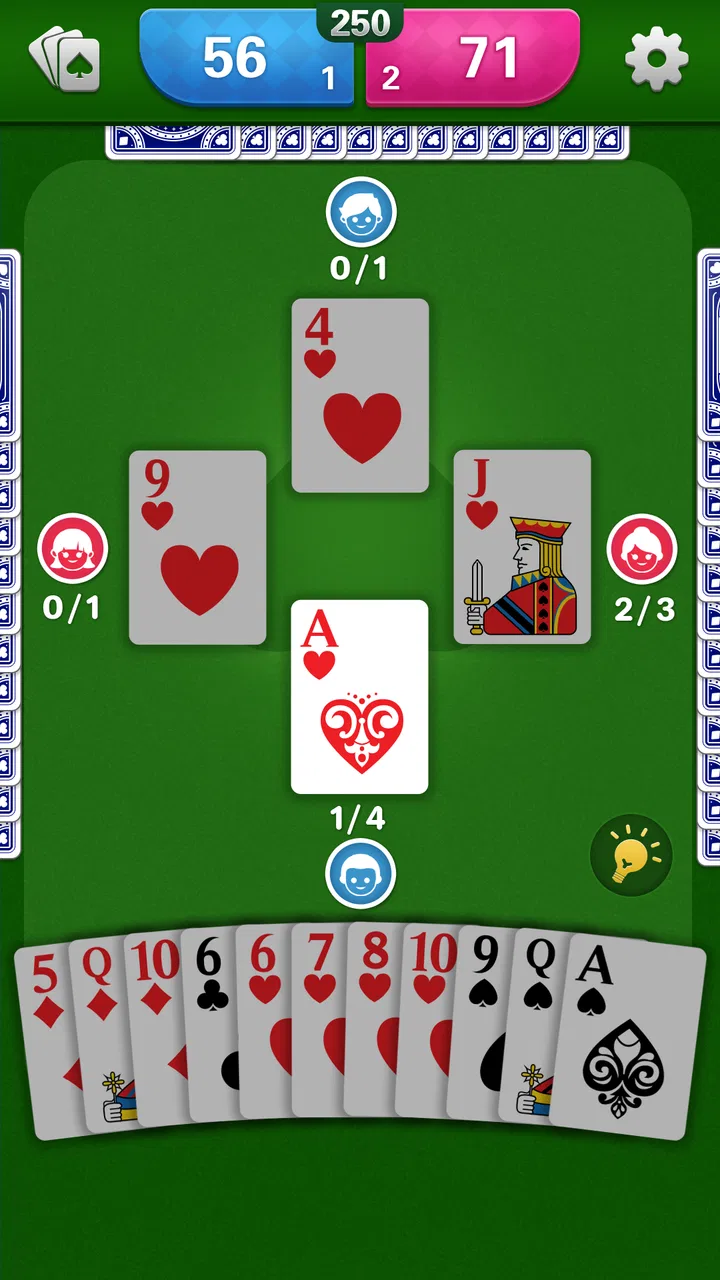
The first goal is simple: understand the rhythm of bidding, follow suit when possible, and decide when to use Spades as trump. That simplicity is important because Spades can feel confusing when a game throws too many instructions at a new player. Here, the central loop gives me a natural learning path. I can concentrate first on counting likely tricks, then on reading the table, and only later worry about more subtle decisions such as protecting a bid or forcing an opponent to spend a strong card.
You May Also Like

 Pandora - Music & Podcasts
Pandora’s Music Is Easy to Start, but Harder to Recover
Pandora’s strength is its low-effort path from a seed to a station. Its weak spot is how much confidence it asks you to place in connection, setup, and quiet recovery.

 8 Ball Pool
 Is Built on Rivalries, Rematches, and Routine
A close look at the rivalries, rematches, shared routines, and unanswered safety questions that turn a quick pool match into a persistent mobile community.

 Samsung Music
’s Quiet Strength Is Playing What You Already Own
Its reach comes less from spectacle than from dependable access to a personal library. That simplicity is both the app’s strongest retention engine and its ceiling.

 AccuWeather: Weather Radar
AccuWeather Review: A Quick, Clear Forecast for Everyday Decisions
For everyday plans, the best forecast is the one you can understand quickly. AccuWeather makes rain timing, radar, and local conditions easy to act on, with a few trade-offs.

 Hill Climb Racing
Why Hill Climb Racing Still Turns Crashes Into One More Run
A tiny car, a bumpy hill and one more upgrade: Hill Climb Racing keeps resurfacing because its simple chaos makes every near-miss feel personal.

 AliExpress - Shopping App
AliExpress Makes Global Shopping Feel Personal, but Shoppers Bear the Risk
AliExpress turns a global marketplace into a pocket-sized discovery engine. Its reach is useful, its shopping loop compelling, and its trade-offs easy to miss.
More From Our News Desk
View All News


I like that the early experience is not dependent on a complicated progression screen. The immediate objective is the hand in front of me. A bid gives the round direction, and every trick provides feedback about whether my plan is working. That creates a useful kind of short-term motivation: I am not merely tapping cards until the game ends; I am testing a prediction I made at the beginning of the hand.
For someone new to the game, I recommend starting conservatively. Do not treat every high card as a guaranteed trick. The suit distribution matters, the order of play matters, and a strong card can become less useful if played too early. I found that the most practical beginner goal is not winning every hand but learning to make bids that I can actually complete. That habit improves the game much faster than chasing impressive-looking plays.
For experienced Spades players, the early goals are less about learning rules and more about settling into the app’s pace. A familiar player can begin making meaningful choices almost immediately. The game does not need a long tutorial campaign to become interesting because the depth comes from imperfect information and timing. I can play a hand casually, or I can analyze every card and treat the same hand as a small puzzle.
A realistic use case is a short break during a commute or while waiting for an appointment. I can open the game, play a focused session, and put it away without needing to remember a large story or manage a complicated collection. That makes it more practical than many card games that surround the main activity with missions, currencies, and constant notifications. The trade-off is that players who need a strong narrative or a large variety of activities may find this presentation deliberately narrow.
What progress feels like when the game stays focused
The clearest progress signal is my own improvement. I notice that I am estimating hands more accurately, recognizing when an opponent is short in a suit, and saving Spades for moments when they matter. Those are not flashy unlocks, but they are meaningful signs that the game is teaching me through repetition. Each completed hand gives me another chance to compare my original bid with the result.
This kind of progress suits Spades particularly well because the rules reward judgement rather than reflexes. I do not need to memorize a long list of special abilities. Instead, I gradually build a mental checklist: how many likely tricks I have, which suits may be dangerous, whether I should draw out opposing Spades, and whether a small card can safely lose a trick. The app works best when I use it as a practice table rather than expecting a large reward structure.
One useful technique is to review the hand mentally after it ends. If I missed my bid, I ask whether the mistake happened during bidding or during play. That distinction matters. Sometimes the hand was overestimated; other times the estimate was reasonable but I used a key card too early. Keeping those two problems separate makes improvement more measurable and prevents the familiar frustration of blaming bad luck for every loss.
The game’s version is listed as 1.2.9, and the minimum operating system is Android 7.0. That gives it a relatively broad device range for people using older Android phones. I would still judge the experience on the individual device, especially if the phone is dated, but the compatibility requirement itself is not demanding. The practical benefit is that this can serve as a simple card table on a spare or older phone rather than requiring the newest hardware.
There is also a subtle advantage to having a focused game instead of a crowded one: I can recognize my own habits. In a collection of many modes, it is easy to move on whenever a strategy feels difficult. With a dedicated Spades experience, repeated hands expose weaknesses. If I routinely overbid when holding several medium cards, the pattern becomes obvious. That makes the app more useful for deliberate practice than its short store description might suggest.
The difficulty curve depends more on judgement than speed
Spades has a gentle entry point but a surprisingly demanding middle game. The rules are approachable, yet good decisions require attention to cards already played and to the likely bids at the table. I found the difficulty curve most satisfying when I stopped looking only at the cards in my hand. The real challenge begins when I track what opponents may no longer hold and use that information to plan the next trick.
New players may initially feel that losses arrive without a clear explanation. That is a normal weakness of trick-taking games: one poor bid can affect the whole hand, and a single early play can remove a later option. My advice is to slow down before committing to the first trick. Consider whether your hand has reliable winners or merely attractive cards. A hand with several high cards in different suits may be less secure than it appears if those cards cannot all win before Spades enter play.
As I improved, I started treating nil-style thinking as a general defensive skill even when I was not deliberately pursuing a special bid. The important question is often not “How do I win this trick?” but “Who benefits if I win it?” Giving an opponent a trick at the right moment can be better than taking it, particularly when the table situation makes their bid vulnerable. That kind of decision gives the game more depth than a simple high-card contest.
The pacing supports this learning process because individual decisions are compact. I am rarely asked to manage several systems at once, so I can focus on the consequences of a play. At the same time, the pace can feel repetitive if I want dramatic changes from one session to the next. This is a card table, not an action game. Its challenge grows through better reading and planning, not through increasingly elaborate visual effects.
Players who prefer fast, low-attention entertainment should know that the game is not always ideal for multitasking. A casual hand can be relaxing, but careless play can quickly turn a manageable position into a poor result. If I am watching a show or answering messages, I may enjoy the game less because the most interesting decisions depend on remembering what has already been played. For that audience, a simpler solitaire game may be a better fit.
Where retention comes from, and where it may become pressure
The strongest reason to return is the compact satisfaction of one more hand. I can try to correct a bidding mistake, test a different opening approach, or simply see whether I can read the table more accurately. That is healthy retention for a card game because it comes from the activity itself. The rules are familiar enough to enter quickly, while the combinations remain varied enough to prevent every hand from feeling identical.
There is also a natural “unfinished lesson” effect. If I lose because I misjudged a suit, I want another chance to handle that situation better. If I make a risky bid and succeed, I may want to see whether the same approach works again. These small personal goals replace the need for a heavy reward track. For me, that is more sustainable than being pushed through a checklist of unrelated tasks.
The limitation is that focused replay can eventually expose the boundaries of the experience. Players who expect frequent unlocks, collectible cards, seasonal events, or a broad competitive ecosystem may not find enough variety here. I would not choose this app as my main game if my priority were constant new content. Its appeal is consistency, and consistency can feel like repetition when I am looking for novelty.
The free entry point lowers the barrier to trying it, but the in-app purchases are worth considering as part of the overall experience. Since items cost between $4.99 and $6.99 each, I would avoid assuming that every useful convenience is included at no cost. I also would not make a purchase simply because a losing streak becomes frustrating. In Spades, a difficult stretch often reflects bidding or card management rather than a need for an upgrade.
My practical approach is to play several hands before deciding whether anything extra matters to me. If the basic table already gives me the relaxed, repeatable experience I want, I can leave it there. If I am considering an item, I would first ask whether it changes the way I play or merely makes the session feel more polished. That distinction helps keep a free card game from becoming an impulse purchase.
How it compares with other ways to play Spades
Compared with a physical deck, this game is more convenient and less social. I do not need another person nearby, a table, or time to explain the rules before starting. That makes it excellent for solo practice and short sessions. The physical version still wins when the goal is conversation, shared reactions, and the small rituals of playing across from real people.
Compared with a general card-game collection, this app benefits from concentration. I am not navigating through unrelated games or learning several rule sets. The downside is obvious: if I want solitaire, hearts, or a different style of challenge, I need another app or a broader alternative. I would choose this one when Spades is specifically what I want, not when I am searching for an all-purpose card library.
Compared with online multiplayer options, the experience is better suited to independent play and less suited to social competition. A live table can provide stronger tension because every opponent is a person with an unpredictable style. On the other hand, solo play is easier to start and does not depend on matching with others or arranging a shared time. For practicing bids and building confidence, I prefer the lower-pressure format; for serious competition, I would look toward a dedicated multiplayer platform.
Another important comparison is with paper scoring. Digital play removes the need to track every total manually, which is helpful when I want a quick session. Paper remains better for groups that enjoy discussing the score and negotiating house rules. The app is therefore not a replacement for every form of Spades; it is a convenient personal version of the game’s core decision-making.
Who should play it and who should skip it
I recommend it to someone who already enjoys trick-taking games and wants a free, focused way to play on Android. It is also a good starting point for a curious beginner who is willing to learn through hands rather than expecting a large tutorial experience. The Everyone content rating makes it approachable for families, although I would still supervise purchases on a shared device.
I would especially suggest it to players who enjoy improving through small decisions. If you like counting possibilities, remembering played cards, and adjusting a plan after a mistake, the repetition becomes rewarding. The game can also work well as a low-stress evening activity because it does not require a long narrative commitment or fast reactions.
I would skip it if I need constant unlocks, a deep collection system, a strong story, or a lively human-versus-human scene. I would also choose another option if I mainly want a variety pack of card games. This title is at its best when I accept its narrow scope and judge it by the quality of its Spades loop rather than by features it was never designed to replace.
One final tip is to use the app as a learning journal without writing anything down. Before each bid, form a quick estimate; after the hand, identify the single decision that changed the result. Over time, that habit turns ordinary sessions into targeted practice. It is more useful than chasing every win because it teaches me which mistakes are predictable and which losses were simply difficult hands.
Overall, I find this a dependable card game with a clear identity. It does not need to overwhelm me with systems to keep Spades interesting. The early goals come from making sensible bids, the progress signals come from sharper judgement, and the difficulty rises as I learn to read the table instead of just my own hand. The retention is strongest when I enjoy that gradual improvement, while the main weakness is the limited appeal for anyone seeking broad variety or constant rewards.
Card Games, Inc has kept the experience focused enough for quick sessions but thoughtful enough to reward attention. With a free download, an Everyone rating, and support beginning at Android 7.0, it is easy to try on a wide range of devices. My recommendation is straightforward: if you want a dedicated solo Spades table that you can revisit whenever you have time for a hand, this is a sensible choice. Its best progression system is the one you build by learning to bid more honestly and play each trick with a plan.
FAQs for Spades: Classic Card Game 2026
01What devices are compatible with Spades: Classic Card Game 2026?
Spades: Classic Card Game 2026 is available on both Android and iOS devices. It supports a wide range of devices, ensuring compatibility with most modern smartphones and tablets. To ensure optimal performance, it is recommended to have the latest version of your device’s operating system installed.
02Is an internet connection required to play Spades: Classic Card Game 2026?
While Spades: Classic Card Game 2026 offers both online and offline modes, an internet connection is required to access multiplayer features and online leaderboards. However, single-player mode can be enjoyed without an internet connection, allowing you to play against AI opponents anytime.
03Are there any in-app purchases in Spades: Classic Card Game 2026?
Yes, Spades: Classic Card Game 2026 includes in-app purchases that allow users to buy various items such as card decks, themes, and additional game modes. While the game is free to download, these optional purchases enhance the gaming experience and offer customization options.
04How does the game handle ads?
Spades: Classic Card Game 2026 includes ads to support its free version. These ads appear intermittently but do not disrupt gameplay significantly. Players have the option to remove ads through a one-time purchase, providing an uninterrupted gaming experience for those who prefer it.
05Can I play with friends in Spades: Classic Card Game 2026?
Yes, Spades: Classic Card Game 2026 features a multiplayer mode where you can invite friends to join a game or find random opponents online. The game supports both competitive and casual play, making it easy to enjoy a game of Spades with friends or other players from around the world.
Pros
- User-friendly interface enhances gameplay.
- Wide range of difficulty levels available.
- Smooth
- lag-free performance.
- Includes multiplayer online mode.
- Customizable avatars and themes.
Cons
- In-app purchases can be expensive.
- Occasional ads interrupt play.
- Limited offline features.
- Requires constant internet for updates.
- Lacks tutorial for beginners.

Spades: Classic Card Game 2026
Gallery